Your central hub for resolving and preventing retail crime. Privacy-first from the ground up, built for retailers and law enforcement agencies who refuse to let crime get ahead.
How Anchorage PD “force multiplies” retail crime resolutions with the Retail Crime Hub
OUTCOMES:
Reports move from filing to warrant in as little as 45 minutes
10 highest impacted stores dropped off the list within ~2 months
336 arrests or warrants in year one
306 cases prosecuted, totaling $263,058.62 in losses
626 total charges filed
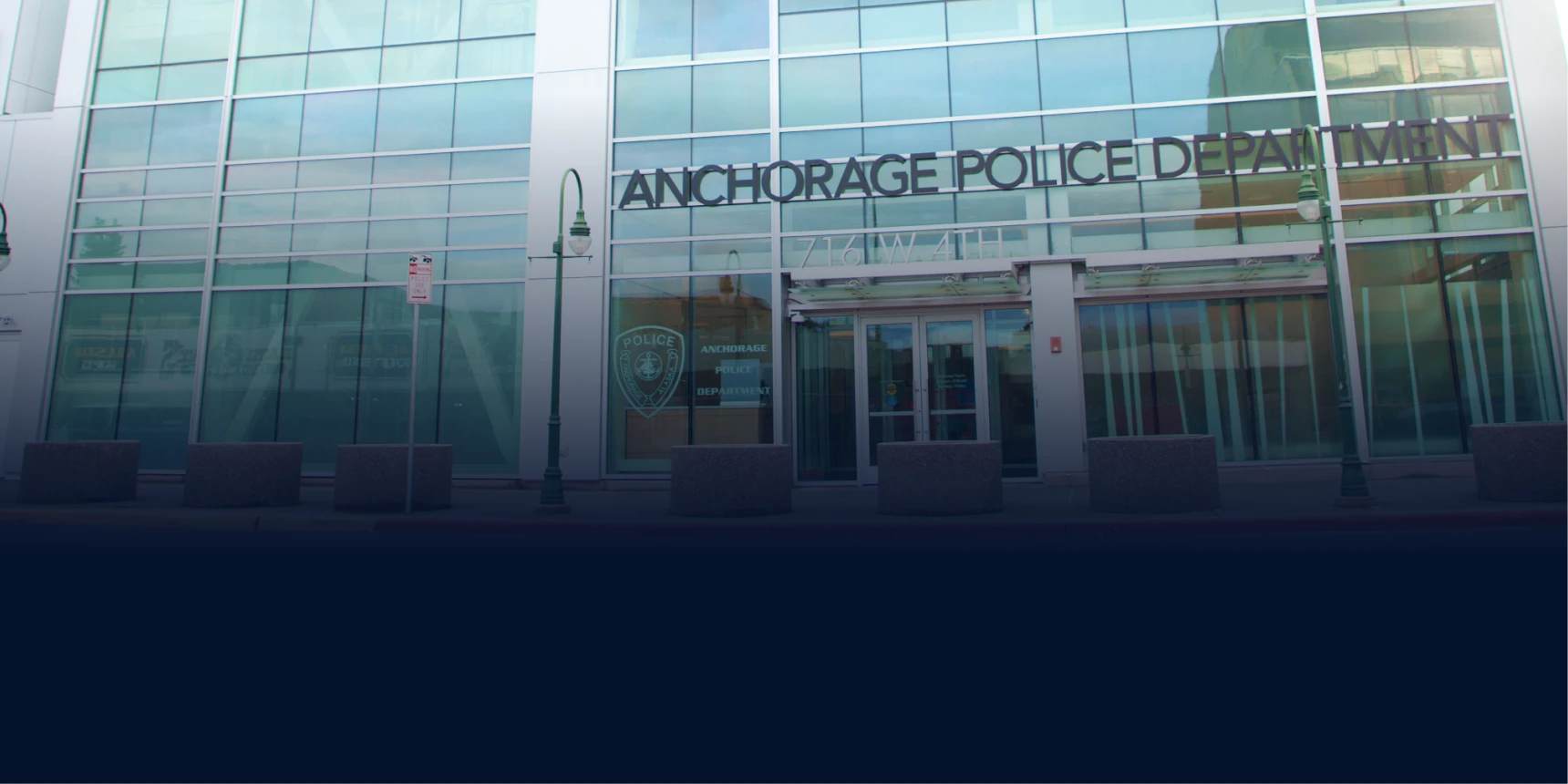
In 2025, after years of retail theft calls landing at the bottom of an overloaded queue, the Anchorage Police Department turned to the Retail Crime Hub, by Auror and Axon. Working alongside retailers already on the Auror Network, the department stood up a dedicated Retail Crime Unit and for the first time, put structured, cross-retailer intelligence behind its retail crime cases. In five months, three officers built stronger cases than the department's previous approach had managed with far more general patrol resources.
The challenges
Before working with Auror’s network of retailers, Anchorage PD handled retail theft as a series of disconnected calls. If a retailer had a person of interest in custody, an officer eventually responded and made the arrest. If not, the retailer filed an online report that had little chance of review given the department's staffing constraints and the volume of higher priority calls competing for the same officers.
With incidents scattered across dozens of stores and no way to see the same offender turning up more than once, most retail theft stalled well short of a prosecutable case.
"It would go into an online reporting system that really doesn't have a feedback loop, so it was a little bit of crying into an echo chamber. [Retailers] didn't feel like they were getting any results."
Brian Wilson, Deputy Chief of Operations, Anchorage Police Department
The solution
Deputy Chief Brian Wilson first heard about Auror in an Axon Week session on retail loss prevention that named several of Anchorage's own major retailers as existing Auror customers. Seeing his own community's retailers already inside the network was the turning point. Brian recalled thinking “I don't know why this wouldn't be the avenue to force multiply and address this issue head on, and a lot more efficiently than we are today."
Anchorage PD soon joined the Auror Network. Believing in the “exponential power” of information Auror’s Retail Crime Hub would bring to their team, they reallocated three patrol officers into a standalone Retail Crime Unit. This specialized unit uses the Retail Crime Hub to work retail crime cases directly with those retailers instead of one incident report at a time.
"[Auror] drove down calls for service exponentially to the point where it was greater than having more than three officers on the street.”
The results
Once cases moved through the Retail Crime Hub instead of a one-by-one call queue, three officers accomplished more than general patrol.
Early retail case outcomes
By focusing on their top 20 most prolific and harmful offenders, Anchorage police saw meaningful results in just ten weeks on the platform, investigating 194 cases resulting in 181 arrests or warrants. After one year on Auror, the unit investigated 555 cases totaling $385,850.16 in losses, secured 306 prosecuted cases totaling $263,058.62, and produced 336 arrests or warrants across 626 total charges.
Prolific offenders now visible
With visibility across every participating retailer's reports, the unit built two target lists, the top 20 offenders by dollar value and a separate top 20 by number of incidents, so it could put limited resources against the people driving the most harm.
One case that started as a single retailer's loss grew, once connected across other stores on the network, into $28,000 in theft tied to one offender."We had one offender, just through the Auror platform, where we had such a large dollar amount that we started reaching out to other retailers,” Brian shared. “So far, that case is $28,000 in theft for one person."
Reliable partner network
The shift also changed how retailers experienced working with the department. Anchorage PD reconstituted its Organized Retail Crime Association, bringing loss prevention teams from across the city together monthly. The team now fields requests from retailers who want in rather than waiting on a call that never comes. Brian says that retailer enthusiasm comes from seeing how efficiently their reported crimes are now processed and prosecuted.
For more information on the Retail Crime Hub, visit Auror for US Law Enforcement.
"The retailers are ecstatic, just to have the interaction with the police department on a more frequent basis. Before this platform, it was just a call for service."
Brian Wilson, Deputy Chief of Operations, Anchorage Police Department













.png)