





Loss prevention has always been about protecting retail stores and the people inside: reducing shrink, stopping theft, and recovering what fraud took. The tools built around it reflected exactly that scope.
But the losses retailers are facing today are harder to put a number on. Frontline teams don't feel safe coming in. Customers stop visiting stores after one bad experience. Communities lose their retail anchor when a location closes because the economics stop working. And the shopping experience deteriorates when crime goes unanswered.
The most effective loss prevention programs have recognized this. The job is to protect people, and to do that at scale across stores, retail businesses, and law enforcement agencies in a way that no single team could achieve alone.
That's what we’ll dive into: what loss prevention means today, how it works, who owns it, and why the category is evolving toward something more connected.
What is loss prevention in retail?
Loss prevention (LP) is responsible for recognizing, reducing, and responding to the causes of inventory shrinkage and harm across a retail organization. It sits at the intersection of retail operations, security, data, and law enforcement.
.webp)
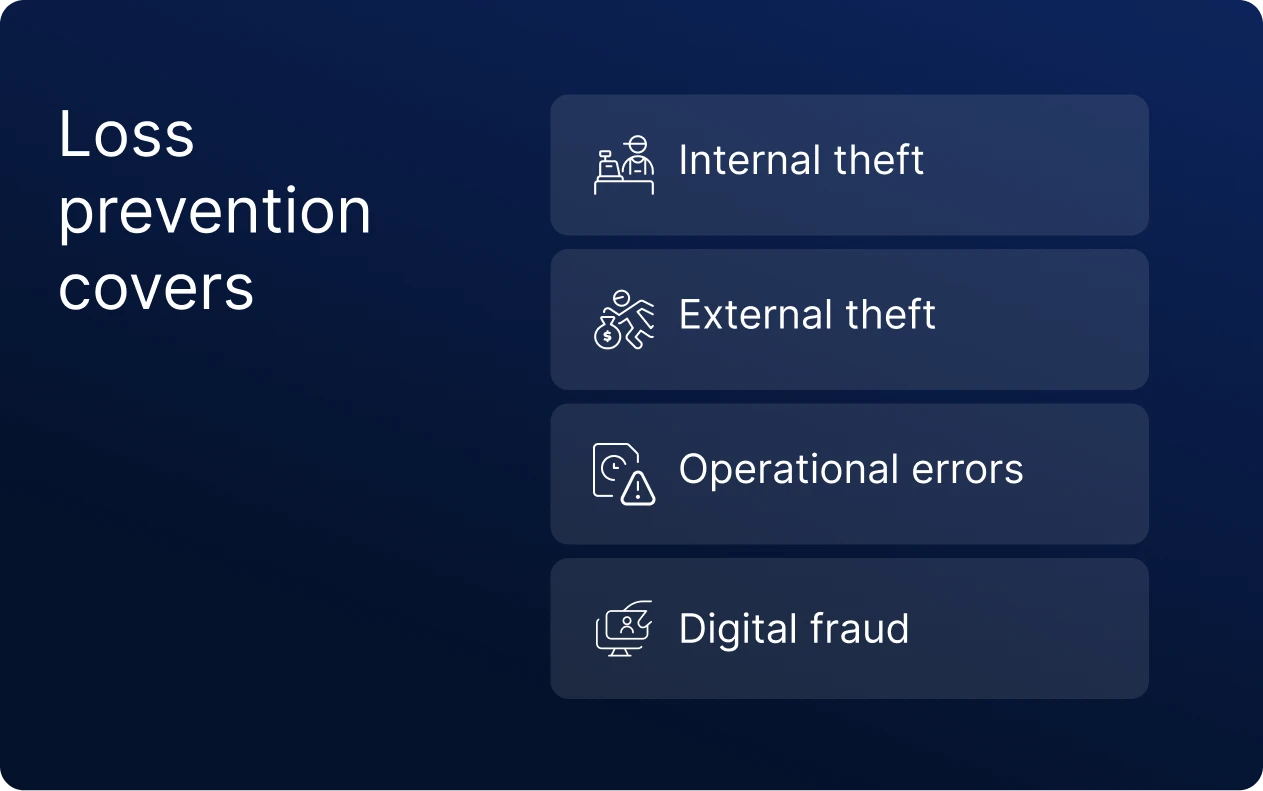
In practice, loss prevention covers:
- External theft, including shoplifting, organized retail crime (ORC), and increasingly violent grab-and-run incidents
- Internal theft, including employee theft, returns fraud, and collusion between frontline employees and external persons of interest
- Administrative and operational errors that create inventory management discrepancies
- Digital fraud, including digital gift card fraud and BOPIS (Buy Online, Pick Up In-Store) fraud
The terms loss prevention and asset protection (AP) are often used interchangeably, and the distinction varies by company. Some organizations use the name "asset protection" to signal a broader remit that includes physical security and risk management. Others use both, as some retailers, like those with dedicated ORC units, split out the investigation function from the day-to-day LP program. Loss prevention and asset protection both share the same goal: reducing harm and loss across the operation.
The traditional framing of both LP and AP falls short because they’re centered on assets over people. Organizations historically asked, “What did we lose?” when the more important questions revolve around who got hurt, who keeps coming back, and why this happens repeatedly.
Causes of retail loss: What does loss prevention protect against?
External theft and organized retail crime
External theft accounts for about a third of retail shrinkage, resulting in significant financial losses for retailers while total theft accounts for two-thirds of retail shrink. What’s changed about retail theft is the scale, organization, and violence behind it. With ORC, groups run repeat, profit-driven operations by targeting specific products to resell. ORC rings hit multiple stores across jurisdictions in coordinated waves, often within a single day.
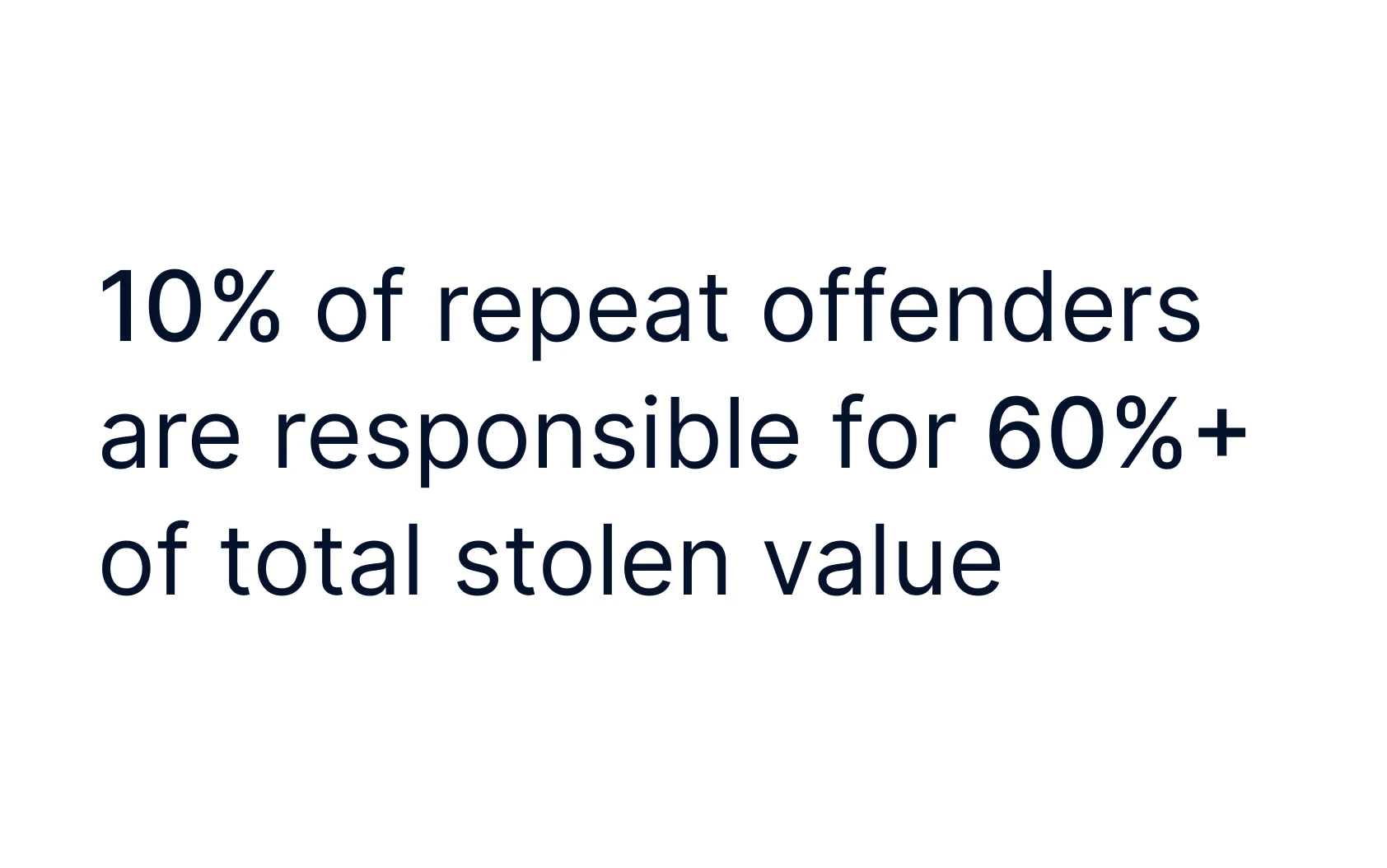
Auror network data consistently shows that roughly 10% of repeat offenders are responsible for 60%+ of total stolen value across all regions. These persons of interest move between stores, retailers, and jurisdictions because no single store has full visibility into their offending pattern.
Most case management software can log external incidents at the store level, but logging isn't connecting. Without the ability to link cases across stores and retailers, the pattern behind ORC activity stays invisible, and the persons of interest driving it keep going.
Repeat offenders also bring a higher risk of violence. Auror data shows repeat offenders are up to 5X more likely to be physically abusive than non-repeat offenders.
Internal theft, including employee theft
Internal threats are equally damaging but harder to detect. Employee theft, return fraud, and employee fraud with external persons of interest drive significant financial loss. Specifically, employee theft, including fraud and misuse of internal access, is estimated to cost US businesses around $50 billion annually. Internal theft often goes undetected the longest because employees understand how systems, schedules, and security tools work.
Recognizing and investigating internal threats requires the same connected intelligence as external ones, not a separate system and team. A full-scale retail crime intelligence platform like Auror manages both in one place, so investigators working on an external ORC case and those tracking an internal fraud pattern are drawing on the same intelligence layer.
Administrative errors and digital fraud
Not all loss is criminal. Administrative errors, such as inventory miscounts, receiving errors, data entry, and digital fraud are a major contributor to retail loss. Inventory management systems can surface these gaps, but only when the data flowing into them is accurate and consistent.
Identifying these requires consistent inventory auditing and operational discipline, and increasingly, the same data infrastructure used to surface criminal patterns. Retail audit workflows bring that process into the same platform retailers already use for external and internal case management, so compliance gaps and crime patterns are visible in one place rather than managed across disconnected tools.
How loss prevention works in retail
Loss prevention programs have historically relied on CCTV cameras, electronic article surveillance (EAS) tags, POS systems, alarm systems, and case management software to log what happened after the fact. Each tool serves a purpose, whether that’s deterring opportunistic theft, slowing down grab-and-run incidents, or reporting anomalies. But in isolation, they generate data without connecting it.
That's the gap Retail Crime Intelligence is built to close. Auror's approach operates across two connected layers. The first is connected intelligence, which captures, connects, and acts on retail crime data across an organization. The second is real-time risk detection, which identifies known threats before an incident occurs.
Connected intelligence
Auror Core is the foundation of connected intelligence, with incident reporting, offender matching, case management, and law enforcement collaboration.
Frictionless reporting that captures quality data
If reporting is slow, cumbersome, or disconnected from outcomes, frontline teams stop doing it. And when they stop doing it, the intelligence that could have stopped the next incident never gets built.
Modern LP platforms remove the friction that makes frontline reporting feel like extra work. Frontline teams capture structured data, including offenders, suspicious activity, vehicles, and evidence, on the go, while AI-assisted capabilities like voice reporting and image extraction do the heavy lifting on detail. Integrations with video management systems, body-worn cameras, and exception-based reporting systems consolidate evidence automatically, so investigators find it waiting for them rather than hunting it down. When reporting is frictionless, retailers consistently report more, giving LP teams a better view of the problem. Director of Loss Prevention at regional US grocer Cosentino's Food Stores says Auror pays for itself in labor costs saves from time back alone:
“Everything we're able to do within Auror we couldn't do [with the previous provider]. We couldn't do the receipt building. We couldn't do the collaboration. We couldn't do the report directly to police type situations… The amount of savings we had just in labor alone covered the cost [of Auror].”
When teams see how their reports lead to real outcomes, like closing an investigation, making an arrest, or stopping a prolific offender, they report more. And the more they report, the richer the intelligence becomes. Former Chief of Police at Schenectady Police Department is saw this across his team as well as they used Auror's Retail Crime Hub to better connect with retailers and collect evidence on cases:
"Once they saw the power of the platform they bought into it and recognized the value of it. And they started seeing successes with it, which just drives more use of it."
Connected intelligence that reduces loss and harm
The patterns across stores and incidents often tell a fuller story than isolated incidents.
Connected intelligence powers the next step of investigations. Retailers can build cases that draw on structured evidence across multiple stores, invite law enforcement into the investigation directly through the platform, and share intelligence that’s ready for the police. What looked like isolated incidents at several locations becomes a coherent, investigation-ready case.
Secure collaboration that stops retail crime
Retailers have historically fought retail crime alone, with tools that couldn't talk to each other or to law enforcement. The result was fragmented data, siloed intelligence, and a reporting loop that never closed. Prolific offenders moved freely because no single store knew what the others had already recorded.
Closing that loop requires retailers and law enforcement working from the same intelligence. When officers receive structured, evidence-rich cases through a shared platform rather than individual phone calls and store visits, they can act on the full picture of offending, not just the most recent incident. That's how isolated incidents become investigation-ready cases, and how prolific offenders get held accountable instead of cycling back through.
Real-time risk detection
Connected intelligence tells you who is causing harm across your stores. Auror Risk Detection extends that intelligence from insight to prevention, surfacing known high-risk persons of interest and vehicles in real time so teams can act before an incident unfolds rather than after.
Vehicle Recognition and Subject Recognition work as a layered defense. Vehicle Recognition provides the first signal, alerting teams when a known vehicle of interest approaches. Subject Recognition provides the second, alerting teams when a known high-risk person of interest enters the store. Because both modules are built into the Auror platform rather than bolted on separately, detections connect directly to the intelligence already captured.
Vehicle Recognition
Vehicle Recognition connects detected license plates to the verified intelligence already in Auror. When a known vehicle of interest is detected approaching or entering a retail location, the store team receives a real-time alert with the full picture behind it: the associated persons of interest, prior incidents, and recorded risk indicators. That context gives teams the time and information to respond before an incident unfolds.
Subject Recognition
Auror Subject Recognition is built for one purpose: detecting known high-risk persons of interest in retail stores before an incident occurs. When a known person of interest is detected, the store team receives a context-rich alert that includes prior incidents, known behaviors, associated persons of interest, and risk indicators. That information gives loss prevention teams what they need to respond safely and proportionately. Responsible use is built into every step: biometric data is discarded immediately for anyone who is not a verified person of interest, enrollment is human-approved, and every detection and outcome is logged for full auditability.
Effective loss prevention strategies
Most loss prevention strategies are built around four strategic pillars: deterrence, detection, investigation, and collaboration. The gap between loss prevention efforts that reduce crime and those that just document it usually comes down to how those pillars connect.
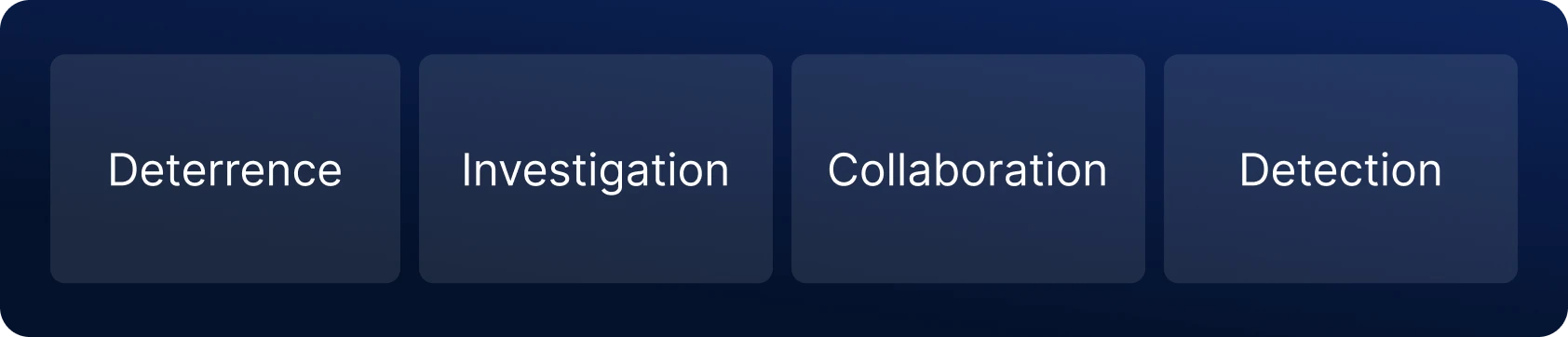
- Deterrence is the first line of defense. Visible security measures, electronic article surveillance, store layout designed around clear sightlines, and signage that signals a store is protected. Deterring theft has a limited impact on organized, repeat persons of interest who have already mapped your environment and assessed your response capability.
- Detection has received the most technology investment in cameras, exception-based reporting, POS systems, and License Plate Recognition (LPR). Detection tools have become significantly more sophisticated, but their value is constrained by what they feed into. A camera that captures an incident is only as good as the system that connects that incident to the pattern behind it.
- Investigation is where the gap between traditional LP and connected intelligence becomes most visible. In a store-level program, investigation means reviewing footage, pulling transaction records, and building a case from what's available locally. With a connected program, investigation means surfacing all related incidents across stores and retailers, identifying persons of interest, and sharing structured cases with evidence directly with law enforcement through the platform, rather than through email chains and store visits that slow everything down.
- Collaboration is the pillar that traditional LP programs have been least equipped to execute. Sharing intelligence with law enforcement has historically required manual effort, personal relationships, and time invested in a process with an uncertain return. When secure collaboration is built into the platform, law enforcement receives intelligence they can act on immediately, rather than reports they have to chase. Retailers come to law enforcement with a case, not an incident.
Most LP programs treat these four pillars as separate workstreams. Auror connects them, giving loss prevention teams the actionable intelligence they need at every stage, without switching systems or chasing down data.
Who is involved in loss prevention?
Loss prevention spans roles from loss prevention officers on the store floor to executives in the boardroom. Understanding who owns what helps explain why intelligence-sharing across those roles matters as much as the security technology supporting them.
- VP of loss prevention owns the program at the enterprise level. They're accountable for shrink targets, frontline safety metrics, and connecting AP outcomes to EBITDA and brand reputation. They need visibility for what's happening, where it's concentrated, and where investment is making an impact.
- LP directors and regional managers are the champions who drive day-to-day program execution. They need a platform that frontline teams will actually use, consistent reporting, and clear visibility into program performance.
- ORC investigators are the power users. They build cross-store, cross-retailer cases against the prolific and organized offenders driving the most harm. They need connected intelligence that surfaces patterns, structured evidence that meets investigative thresholds, and a direct line to law enforcement agencies.
- Field LP managers and frontline store teams are the first line of reporting and alert response. They need tools that are fast, intuitive, and directly connected to outcomes they can see, so reporting feels worth the effort.
- Law enforcement partners are the other side of the equation that traditional LP programs have historically underserved. When retailers and law enforcement agencies work from the same intelligence platform, the loop between reporting and resolution closes, cases progress faster, and prolific offenders face accountability that isolated reporting alone could never produce.
The network that makes modern loss prevention possible
Retail crime doesn't stay within one store, retailer, or jurisdiction. Organized offenders move freely, stealing goods across multiple locations in coordinated waves, knowing that the stores they're targeting can't see each other's data. A prolific person of interest recorded across a dozen of your locations has almost certainly hit your competitors too. That intelligence exists, but never gets shared.
Solving that problem requires more than better software. It requires smart retail loss prevention strategies and a network: retailers and law enforcement agencies working from the same intelligence, where every incident reported strengthens the picture for everyone and every resolved case makes the next investigation faster.
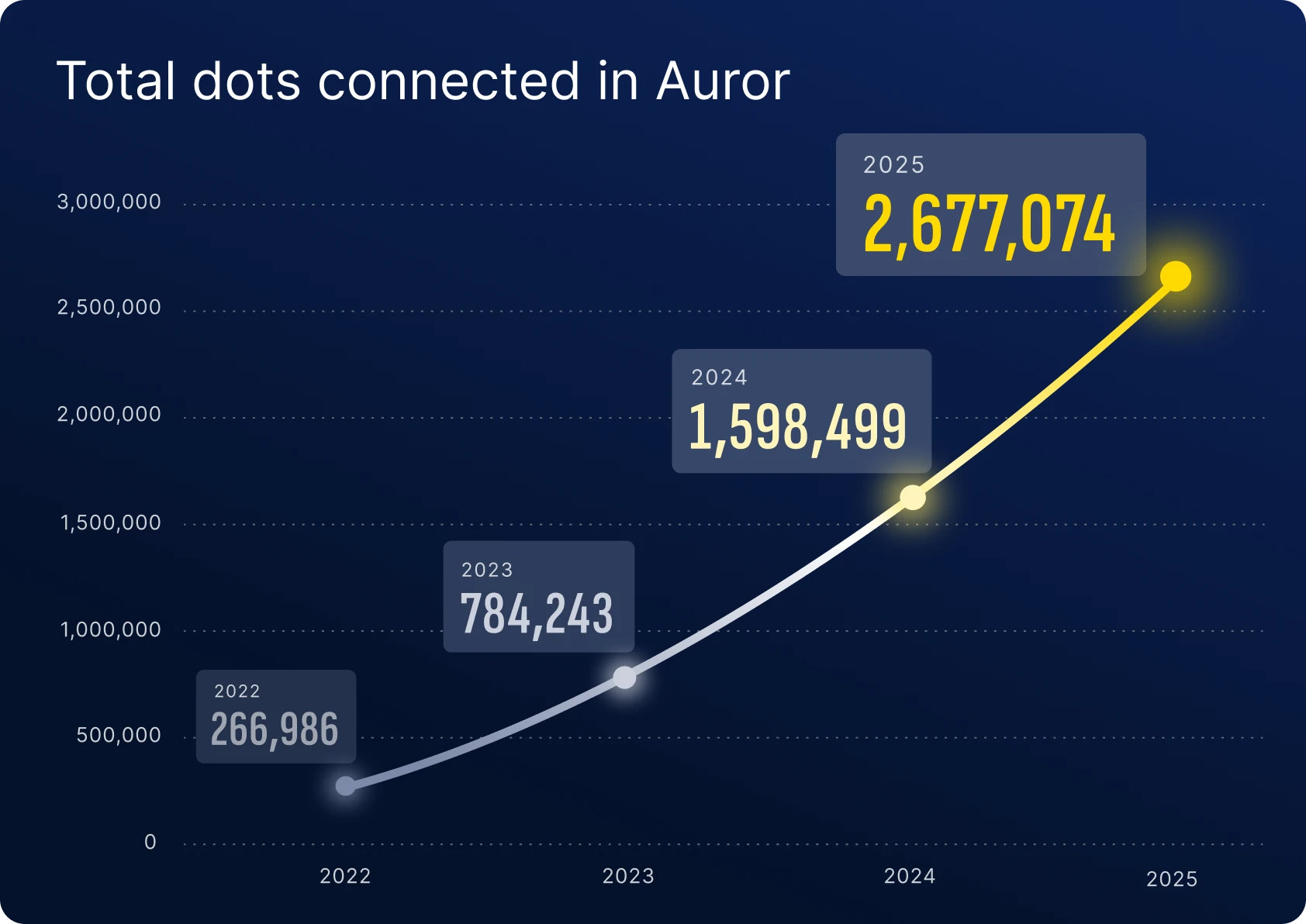
The Auror Network connects 85,000 stores and 3,500+ law enforcement agencies in a single retail crime intelligence ecosystem. Retailers who join don't start from zero. Retailers and law enforcement agencies inherit a decade of accumulated intelligence on repeat offenders driving the majority of loss across the industry.
When stores are safer, store teams stay longer, and customers come back. To see what Retail Crime Intelligence looks like in practice, see our loss prevention software overview.




.webp)